
GCSE OCR Combined Science B Papers 1 and 5

Mock test. 1 hour and 45 minutes. 95 marks available.

Each time the test is taken it will present different questions.

 
QUIZ START

Results

Well Done you passed the test! You’re on your way to getting the grades you want!
OCR Combined Science B Papers 1 and 5

Why not try another Science Mock Exam and see how well you do?

Nice try, check your answers to see where you went wrong.

OCR Combined Science B Papers 1 and 5

Why not get a bit more practice with some biology quizzes and then come back and have another try!

#1. Which of the following is the correct word equation for aerobic respiration?

#2. When is adrenaline released?

#3. What is the cell wall made from in bacteria?

#4. The water cycle has one part where water is in solid form – what is that form of storage?

#5. Through which process would air freshener sprayed in one corner of a room disperse?

#6. Is diffusion an active or a passive process?

#7. The female gametes (egg cells) are adapted to their function. Which of the following are adaptations of egg cells?

Select all that apply:

#8. What is stroke volume measured in?

#9. Is the following statement accurate: nitrogen be can be moved back and forth from the atmosphere and into the soil by bacteria.

#10. What are biotic factors?

#11. Fill in the gap: Receptors detect pain and send impulses via the sensory neurone towards the spinal cord. The ………………… intercepts the signal and diverts it along motor neurones to the effectors (muscles) which quickly move away from the source of pain.

#12. What is the role of the central nervous system (CNS)?

#13. Which type of factor is water availability?

#14. Upon the release of adrenaline do blood vessels widen, narrow or both?

The blood vessels are constricted or dilated depending on where the blood flows.

The muscles required for running for example are dilated since they are required to match the “fight or flight” response. Others are constricted as they are temporarily deemed less important.
#15. Growth hormone stimulates cells in muscles and bones to divide. It also stimulates another system, which system is this?

#16. Which of the following is part of the central nervous system (CNS)?

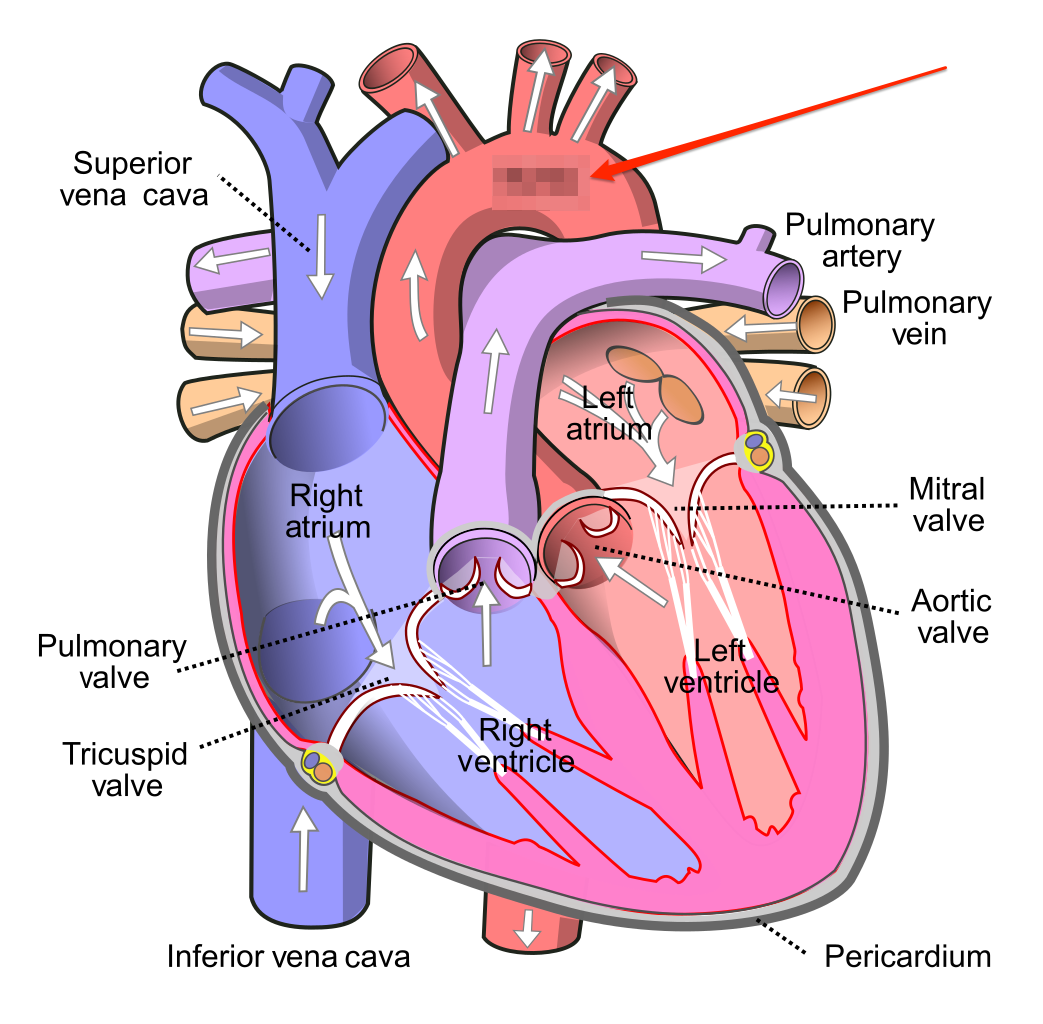
#17. What is the part of the heart that the arrows are pointing to?

#18. How do we describe the periodic changes in population size of predators and prey – explained by increases in numbers of predators due to increased numbers of prey and then decreasing numbers of prey due to increasing numbers of predators and so on?

#19. What do we call animals that only eat plants?

#20. Hormones are released by a range of glands, name one gland that releases hormones. ? do not include the word "gland" or "glands"

#21. Why is catalysis by enzymes important for life processes?

#22. What does μm stand for?

#23. Name two resources that both animals and plants need to survive and reproduce? ? structure your answer like this: ..... and .....

#24. Which parts of the heart and blood vessels stop blood from flowing in the wrong direction?

#25. Which organisms maintain the nitrogen levels in the soil?

#26. How do substances typically move into and out of the body, for example, oxygen in the lungs? ? 1 word answer

#27. What is the resolution of electron microscopes limited by?

#28. What is the binomial name for humans?

#29. Which type of factor is nutrient availability?

#30. Capillaries are only one cell thick and have thousands of branches. What is the function of capillaries?

#31. Which of these is an ecosystem?

#32. What is the word equation for photosynthesis? ? In some examples you might also see sunlight and chlorophyll above and below the arrow.

#33. Why is the rate of an enzyme controlled reaction lower at lower temperatures?

#34. Which part of the heart separates the two sides?

#35. Place the measurement units in order from from biggest to smallest. micrometres, picometres, kilometres, metres, nanometres, millemetres ? Use British Spelling - Metres* NOT Meters

#36. Which type of factor is air temperature?

#37. Which of the following is the source of coal?

#38. Which structures in the lungs increase the surface area and therefore the speed and amount of gas exchanged?

#39. Palisade cells are found just below the epidermis of leaves. What is their role and how are they adapted to perform it?

#40. Which type of factor is parasitism?

#41. The drug called Digitalis slows the heart rate. Where does the drug come from?

#42. What is the gap between neurones called?

#43. Which of these is a community?

#44. Which type of factor is pollution?

#45. What do we call the process by which farmers change the crops they grow each year to maintain nitrogen in the soil?

#46. Which of these is an effector?

#47. Surfaces where diffusion takes place allowing substances to enter the body usually have which characteristics?

Select all that apply:

#48. What is the heart rate measured in?

#49. What are the monomers of carbohydrates?

#50. Which of the following descriptions best matches the hormonal system?

#51. Which of the following is the equation for total magnification?

#52. Why is the binomial naming system useful for scientists?

#53. What do we call animals that eat both other animals and plants?

#54. What is groundwater?

#55. Producers are organisms which do what?

#56. Fill in the gap to complete the word equation for aerobic respiration. glucose + oxygen → ….. + water

#57. In which part of the cell does anaerobic respiration take place?

#58. Which of the following are prokaryotes?

Select all that apply:

#59. What is the function of platelets?

#60. What is meant by an active process?

#61. Decomposers break down dead animal and plant material – what happens to the carbon inside the dead organisms?

#62. What is the field of view of a microscope?

#63. What do we call animals that are eaten by other animals?

#64. What effects does adrenaline have on the heart?

Select all that apply:

#65. What is potable water?

#66. Why does the rate of an enzyme controlled reaction plateau at a certain substrate concentration? ? plateau means level out

#67. What is enzyme specificity?

#68. What is the role of starch synthase?

#69. Finish the sentence: Nitrogen compounds found in artificial fertilisers are ……… and dissolve in the soil’s water.

#70. What is the role of glycogen synthase?

#71. How can we increase the accuracy of abundance estimates?

#72. Through which process would air in a space station move if someone opened a door to space?

#73. Organs that exchange substances into and out of the body have:

#74. Why can humans only survive a few days without water?

#75. What is the role of protease?

#76. Which are the two kinds of sampling we normally use?

Select all that apply:

#77. What is the Lock and Key Model of enzyme action?

#78. Which system is responsible for ensuring the supply of oxygen and glucose to cells?

#79. Is active transport an active or a passive process?

#80. True or false – A passive process is automatic and does not require energy?

#81. The 5 kingdoms of life are Animals, Plants, Fungi, Protists and Prokaryotes. Which kingdom do algae belong to?

#82. What is the correct order of groups in the Linnaean Classification system?

Remember:

King Prawn Curry is the Only Food that Gives Satisfaction

#83. By which process does water in the oceans and lakes move into the atmosphere?

#84. What is the name of the chemicals that we use to transmit messages through the blood to organs?

#85. If grass is eaten by a rabbit and a rabbit is eaten by a hawk. What level of consumer is the hawk?

#86. During exercise, your cells require more oxygen and glucose. What changes in the body happen during exercise to meet these increased needs?

Select all that apply:

#87. The left ventricle has a thicker muscle wall, why is this the case?

#88. Which hormone is released from the adrenal gland?

#89. Which of the following plants have a mutualistic relationship with nitrogen-fixing bacteria?

Select all that apply:

#90. How do most plants get their nitrogen?

#91. Is respiration an exothermic or an endothermic reaction?

#92. Which of the following are factors that affect the rate of diffusion?

Select all that apply:

#93. What is the molecular formula for glucose?

#94. What is the function of the cell wall?

#95. Arteries carry blood around the body, do they carry blood away from or towards the heart?

Remember – Arteries Away

Previous
Finish