GCSE OCR Combined Science A Papers 5 and 11

Mock test. 1 hour and 10 minutes. 60 marks available.

Each time the test is taken it will present different questions.

 
QUIZ START

Results

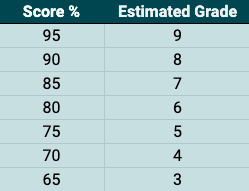
Well Done you passed the test! You’re on your way to getting the grades you want!
OCR Combined Science A Papers 5 and 11

Why not try another Science Mock Exam and see how well you do?

Nice try, check your answers to see where you went wrong.

OCR Combined Science A Papers 5 and 11

Why not get a bit more practice with some physics quizzes and then come back and have another try!

#1. Is this a parallel or series circuit?

#2. Why is the total energy transferred to a kettle’s heating element, more than the total energy of the boiled water inside the kettle?

If you could accurately measure the movement of energy, you would always find that all of the energy is transferred. Energy cannot be created or destroyed, this is known as the Law of Conservation of Energy.

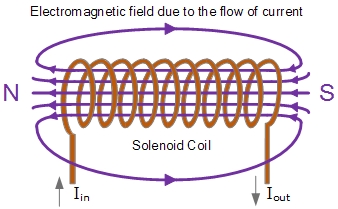
#3. A coil of wire with current flowing through it is an electromagnet. What else do we call a coil of wire?

#4. Is speed a vector or a scalar?

#5. Which of the following is the correct equation for work done?

#6. What is the function of a voltmeter?

#7. Are gases fluids?

#8. Which of the following best describes energy?

#9. Magnets have north and south poles – if two north poles are put close together what will happen?

#10. What is this component?

#11. What is the function of a variable resistor?

#12. What is a resultant force?

#13. Which theory do we use to describe states of matter?

#14. Which of the following is the equation for change in gravitational potential energy?

#15. What is the equation for kinetic energy?

#16. What state of matter has particles which are close together and move around each other?

#17. True or False – Vector quantities only have magnitude?

#18. How is kinetic energy stored?

#19. If a car experiences a resultant force in the forwards direction, what will happen to the motion of the car?

#20. Is acceleration a vector or a scalar?

#21. Aluminium is a magnetic material – true or false?

#22. A train is travelling at 45 miles per hour. The driver puts on the brakes in order to stop at the station. Where is the kinetic energy of the train being transferred to?

#23. Nickel is a magnetic material – true or false?

#24. How is gravitational potential energy stored?

#25. What is induced magnetism?

#26. Iron is a magnetic material – true or false?

#27. What is the function of a diode?

#28. The needles of plotting compasses are tiny magnets – they always point near the Earth’s North Pole – why is this?

#29. What is the name of the phase change from liquid to gas?

#30. Complete the equation for power. Power (W) = work done (J) / ……..

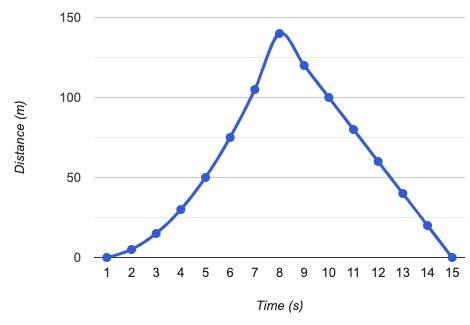
#31. Calculate the distance travelled by the runner in the velocity/time graph.

The area under the graph = distance travelled

Split the graph into triangles and rectangles and calculate the areas. Then add together the areas.

Area of a rectangle = Length x Height

Area of a triangle = 1/2 x Length x Height

90m 120m 180m = 390m

NOTE: the graph starts at one second and not 0. Don’t be fooled, look at the axes carefully before attempting a question.

#32. When two magnets are placed alongside each other – what is the best way to describe the shape of the magnetic field they produce?

#33. Calculate the acceleration of the object in the graph between 5 and 6 seconds.

This is a straight-line graph.

Calculate the gradient of a straight-line graph using the following:

y₂ – y₁ / x₂ – x₁

30-20/6-5 = 10m/s²

This is the same as a simpler version:

Rise/run

or vertical distance / horizontal distance

#34. Which of the following devices do we use to measure weight? ? 2 answers

Select all that apply:

#35. Using the kinetic energy equation – calculate the kinetic energy of a car with a mass of 1200kg travelling at 10 m/s. Include units. ? If you do not remember the kinetic energy equation it is listed below the quiz.

#36. An electric motor does 70,000 J of work in 200 s. Calculate the Power of this action. Include the units and answer to 1d.p ? Do not include your workings in your answer

#37. Complete the equation for weight. W = m x ……..

#38. Which of the following statements is correct?

#39. What is Newton’s Second Law of Motion?

#40. Vectors have which of the following quantities?

#41. What is the name of the phase change from solid to gas?

#42. What is potential difference measured in?

#43. What is this component?

#44. What state of matter has particles which are close together and vibrate around fixed positions?

#45. What does F represent in the equation for work done?

#46. Magnets have north and south poles – if two south poles are put close together what will happen?

#47. What is the acceleration of an object that has an initial velocity of 10m/s and a final velocity of 50m/s. The object took 15s to accelerate to the final velocity.

Use the following equation:

a = (v − u)

t

#48. Which of the following equations is the correct way to make A the subject of the equation F = MA?

Take a look at this video on rearranging equations if you got this one wrong.

YouTube video

#49. What do we call the energy transferred by a force?

#50. Which scientist proposed the Plum Pudding Model?

#51. What is the function of a fuse?

#52. Does the total amount of current change from the positive to the negative terminal?

Because current is conserved.

#53. Is momentum a vector or a scalar?

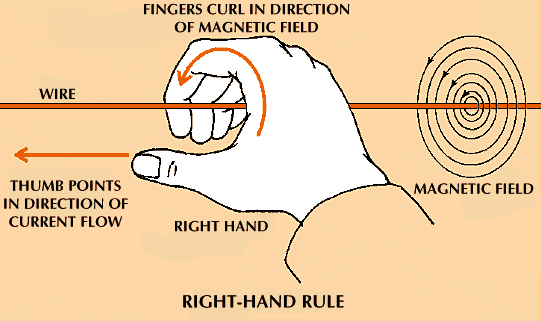
#54. This image shows Flemming’s Left Hand Rule. Which of the following answers are the correct interpretations of the rule? ? Select three answers, one for each finger

#55. The gravitational field strength is higher on Earth than on the Moon. How does an astronaut’s weight change when they go from the Earth to the Moon?

#56. Does a current flow if there is no source of potential difference?

#57. What do we call energy that is stored in twisted or stretched materials?

#58. Energy can be transferred to useful and non-useful forms. Which of the following are non-useful transfers of energy?

Select all that apply:

#59. Why does the temperature of a material stay constant during the transition from liquid to gas?

#60. What is the function of a resistor?

Previous
Finish