
GCSE OCR Combined Science A Papers 2 and 8

Mock test. 1 hour and 10 minutes. 60 marks available.

Each time the test is taken it will present different questions.

 
QUIZ START

Results

Well Done you passed the test! You’re on your way to getting the grades you want!
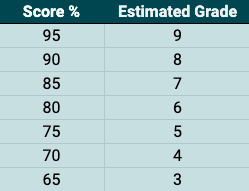
OCR Combined Science A Papers 2 and 8

Why not try another Science Mock Exam and see how well you do?

Nice try, check your answers to see where you went wrong.

OCR Combined Science A Papers 2 and 8

Why not get a bit more practice with some biology quizzes and then come back and have another try!

#1. Tapeworms and ticks are examples of parasites – which of these lives inside another organism?

#2. What do we mean by the distribution of organisms?

#3. What do we call animals that are eaten by other animals?

#4. Which of the following plants have a mutualistic relationship with nitrogen-fixing bacteria?

Select all that apply:

#5. What does abundance measure?

#6. Complete the equation used to calculate population size: population size = ………….. x total size of it habitat / total area of quadrats

#7. Is this relationship parasitic or mutualistic? A coral polyp (providing shelter) and single-celled algae (providing food)

#8. What are the three domains?

#9. Which type of factor is predation?

#10. What are biotic factors?

#11. How does nitrogen in plants get into the soil?

#12. Which of the following organisms belong to the kingdom – animals?

Select all that apply:

#13. What do we call animals that only eat plants?

#14. Which of the following can we use to investigate the effect of abiotic factors on the distribution of organisms?

#15. What are nitrogen-fixing bacteria?

#16. Who invented the binomial naming system?

Uh oh, maybe you need some lessons!

#17. Where does the water in lakes and rivers end up?

#18. What is the binomial name for humans?

#19. Why do plants need oxygen?

#20. What is a parasite?

#21. Where are nitrogen-fixing bacteria found in plants such as peas and beans?

#22. We sometimes use a transect to perform systematic sampling. This involves which of the following?

#23. Sometimes it is not possible to measure the number of organisms in a transect, for example when measuring the distribution of plants. In this case we use an alternative measure called what?

#24. Which of the following is the source of oil and gas?

#25. Which term do we use to describe the relationships between species that depend on each other for resources?

#26. How do we describe the periodic changes in population size of predators and prey – explained by increases in numbers of predators due to increased numbers of prey and then decreasing numbers of prey due to increasing numbers of predators and so on?

#27. Which type of factor is nutrient availability?

#28. Why can humans only survive a few days without water?

#29. Which of these is an example of a parasitic relationship? 1) An insect and a flower 2) A vampire bat and a cow 3) A coral polyp and single-celled algae

#30. Is the following statement accurate: nitrogen be can be moved back and forth from the atmosphere and into the soil by bacteria.

#31. What natural source of nitrogen is sometimes added to fields by farmers?

#32. Which type of factor is pollution?

#33. By which process does water in the oceans and lakes move into the atmosphere?

#34. Finish the sentence: Nitrogen compounds found in artificial fertilisers are ……… and dissolve in the soil’s water.

#35. Which type of factor is competition?

#36. Respiration from animals is a source of carbon dioxide in the atmosphere – do plants also use respiration?

#37. Which of these is a community?

#38. Is this relationship parasitic or mutualistic? A crocodile which lets a small bird feed on leftover meat between its teeth

#39. Which organisms maintain the nitrogen levels in the soil?

#40. Is the following statement accurate? Lightning can cause atmospheric nitrogen to be released into the rain and be washed into the soil?

#41. Which square instrument do we use for randomly sampling population sizes?

#42. How much of the atmosphere is composed of nitrogen?

#43. In a scientific investigation, you and two others randomly sample a rocky shore using quadrats. You find that on average there are 2 crabs per quadrat and the whole shore would be covered by 150 quadrats. Estimate how many crabs are on the whole shore.

#44. Match the description to the correct term. All of the organisms that live in a particular pond.

#45. Why do plants need nitrogen?

#46. How can parasites affect the nutrition of their hosts?

#47. The binomial name for tigers is Felis tigris. Which part of the name represents the genus?

#48. Which of these substances is sometimes added to water to make it potable?

#49. What is potable water?

#50. Name two resources that both animals and plants need to survive and reproduce? ? structure your answer like this: ..... and .....

#51. True or false – plants remove carbon from the atmosphere during photosynthesis

#52. Which type of factor is parasitism?

#53. What is groundwater?

#54. True or false – volcanism removes carbon from the atmosphere

#55. Which type of factor is air temperature?

#56. Which type of factor is disease?

#57. What groups of organisms belong to the domain – eukaryotes? ? Eukaryotes have a membrane bound nucleus

Select all that apply:

#58. Which type of factor is soil composition?

#59. The 5 kingdoms of life are Animals, Plants, Fungi, Protists and Prokaryotes. Which kingdom do algae belong to?

#60. By which process does water in the clouds move onto land?

Previous
Finish